Multi-agent management
Many agents, one process
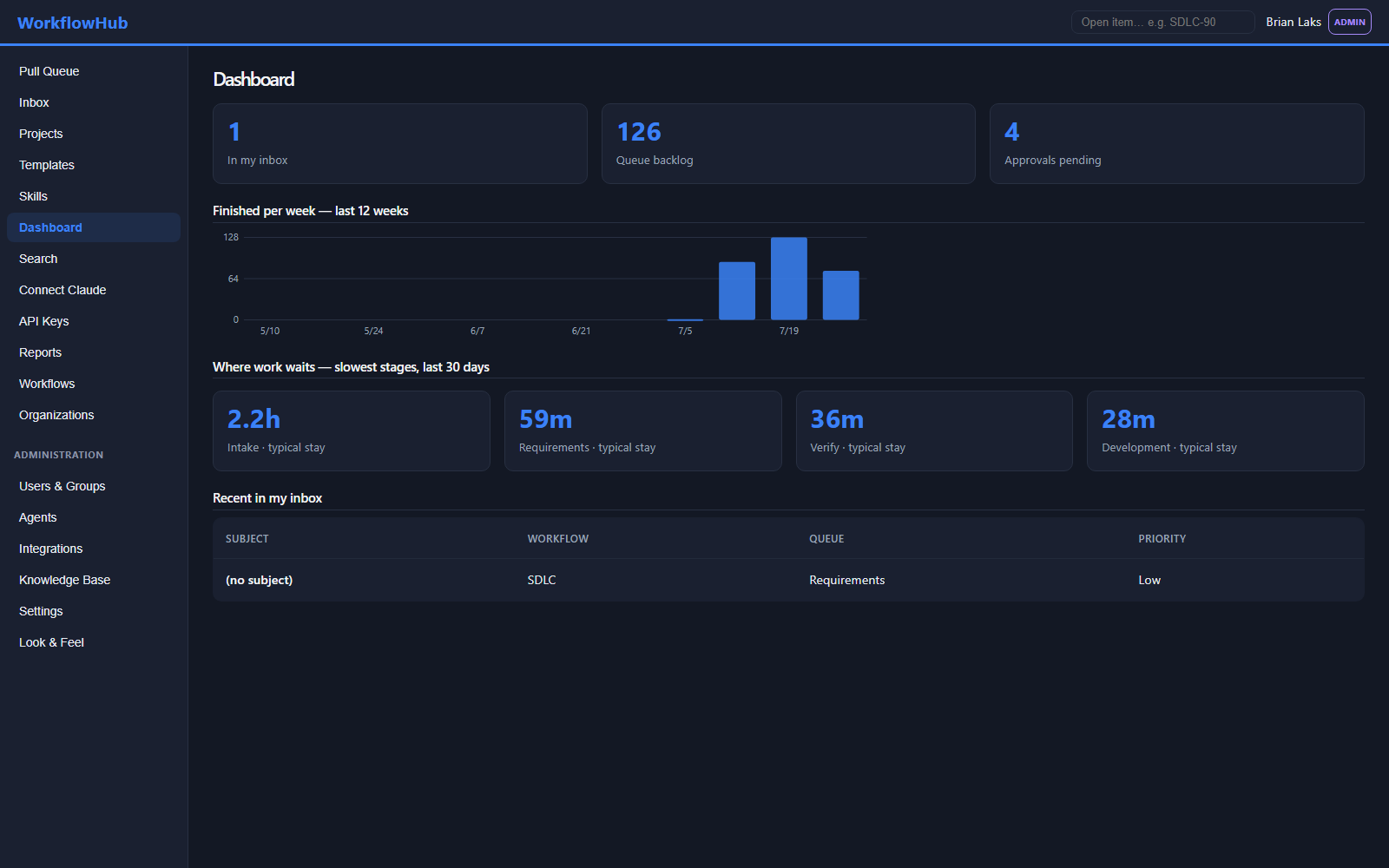
One agent on one task is a prompt. A team of them on a real process is four jobs: allocate capacity to the right stage, instruct each agent for the step it is on, supervise the ones that stall, and stay accountable for what was done. A system that does only the first is a scheduler.
Allocation in real time
A central allocator works out which stage each unit of agent capacity should be on, and re-decides as the backlog changes shape. It ships in advisory mode: it publishes the plan and an owner turns enforcement on deliberately. A scheduler nobody has watched does not get to move real work.
Downstream-first flow control
Finish what's already in flight before pulling more in. Per-stage work-in-progress limits and an admission throttle keep the pipeline from filling up faster than it empties — Theory of Constraints and Kanban, applied to agents.
Decisions you can check
Every allocation decision is published with the reasoning behind it, so you can see why each agent is on the stage it's on. It is an explained plan you can audit, not an opaque scheduler you have to trust.
Tuned to your business
Priority by organization and project, plus knobs for how hard work is pulled along. The policy is yours to set, and the allocator applies it the same way for every agent — once you have armed it.